RWB does not determine the content of GOOGLE Ads, but does benefit from your click.
Another side of Bob and more!
Daily Ramblings:
Look My Way An' Pump Me A Few ...03/23/2005
10:08:17 pm
An Evening Of Talk On Bob Dylan;
March 21st, 2005, Miller Theater (Columbia
University, New York City), 8 pm.
Not quite three angels, but three angles on
Dylan were offered for the pleasure of the attending
public the other night at Columbia University. The
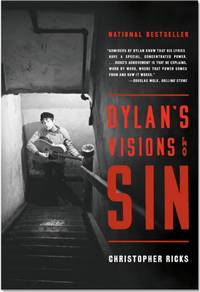
speakers were: Professor Christopher Ricks (esteemed poetry
critic, writer of highly regarded works on Milton,
Keats, Eliot and others, and recently author of Dylan's
Visions Of Sin); Sean Wilentz (Professor of History
at Princeton, contributing editor at the New
Republic, and "historian-in-residence" at
bobdylan.com); and Greil Marcus ("perhaps the
most celebrated writer on American popular music and
culture," as the promo said).
Ricks was to talk about Blonde On Blonde.
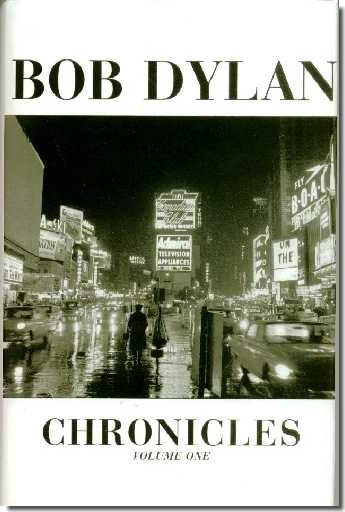
Wilentz was to speak on Chronicles. Greil
Marcus, the flyer told us, was to speak on "Masters
Of War, one of Dylan's most searing critiques of
the human tendency to war in the name of nationalism
and religion."
Yes, you read that last sentence right. Silly you
for thinking Dylan was trying in that song to write
specifically about the "military industrial
complex" that Eisenhower warned about - as he's
said in interviews more than once.
Whether Marcus wrote that line, or someone at
Columbia did, I don't know - Marcus's talk, although
quite objectionable, took a somewhat different tack.
Marcus spoke first (resulting in Right
Wing Bob literally developing a
headache fairly promptly), but let me first briefly
give my own impression of the other two talks.
Sean Wilentz had the enviable
task of talking about Chronicles: enviable
because there's so much to say about that book that
hasn't yet been said and you could start just about
anywhere. Wilentz started well, telling us that one
of the achievements (and/or purposes) of Dylan's
memoir was to "record old gratitudes." It
is indeed extremely noteworthy just how generous
Dylan is to most of those whose crossed paths he
illuminates in this book - and how thoroughly he does
credit those who influenced him and set him on his
way (from Frank Sinatra to Brecht and Weill to Robert
Johnson and on and on). Wilentz never really got back
to that theme, if it were intended to be one, but
focused well on Dylan's description of days spent at
the New York Public Library, reading microfilmed
newspapers from before and during the American Civil
War. Dylan says of that time spent reading, "You
get the feeling that the newspapers themselves could
explode and lightning will burn and everyone will
perish." Wilentz drew out Dylan's theme of
finding a parallel America (Wilentz also referred to
Greil Marcus's "Invisible Republic"
coinage), conjured from the nation's Civil War legacy
and blues and folk heritage, and other sources.
Dylan, in his words, "learned to write about the
present out of the past."
Wilentz's talk was intelligent, though rambling.
At one point he read an extract from Tarantula
- a act of courage, if nothing else. It's a passage
that is structured around a Leadbelly refrain, and it
ends with these lines:
betty had a loser blam de lam, i spied him
on the ocean with a
long string of muslims - blam de lam! all going
quack quack
. . . blam de lam! all going quack quack, blam!
which Wilentz related to the contemporaneous
assassination of Malcolm X.
The crowd was appreciative, if yawning a little.
Wilentz's talk might well read better than it
sounded.
Christopher Ricks was instantly
the showman of the evening - merely by choosing to
start his talk on Blonde On Blonde by having
us all listen to the first track of that album
(neither of the other two speakers chose to play any
Dylan music). So, we got to watch the 71 year old
Oxford Professor Of Poetry bobbing his head to the
groove while Dylan sang:
Well, they'll stone you when you
walk all alone.
They'll stone you when you are walking home.
They'll stone you and then say you are brave.
They'll stone you when you are set down in your
grave.
But I would not feel so all alone,
Everybody must get stoned.
It was striking to this listener that the most
genuinely accomplished of the three speakers was
willing to devote a good chunk of his speaking time
to just letting Dylan's music play, uninterrupted. It
served his purpose, because his purpose was (as is
his wont) to draw out elements of Dylan's art that
have their way with us but of which we may not be
consciously aware. He immediately posed the question,
"What do you see when you hear this song?"
A little later he drew attention to Dylan's departure
from the "official" text, in the second
line:
They'll stone ya just a-like
they said they would.
- where Dylan on the record actually sings
something like: "just li-hike
they said they would." Ricks saw that as Dylan's
way of asserting that this is not a song that says
something, but rather that it is a song that sings
something. It's also an example of melisma, that
feature of a song - as distinct from a poem - where a
single syllable can "flower into several
notes." (It's obviously a device that Dylan
makes very effective use of in his work.)
Ricks said that he considers Blonde On Blonde
to be a "love album," and he amusingly
paraphrased the various scenarios in which you might
say the "lover" on the album finds himself,
song by song. He also touched on the allegations of
misogyny that some other writers have hurled Dylan's
way. He quoted Dylan's (recent) line:
There ain't no limit to the amount
of trouble women bring
... and he talked of stereotypes, pointing out
michievously that many of those who most vociferously
oppose stereotypes are quite enthusiastic about
"role models."
Ricks also went through the titles of each of the
songs on Blonde On Blonde, distinguishing
those where the the titles are naturally deducible on
hearing the song (e.g. I Want You) from those
where you could never conceivably guess the title
from the song (e.g. Temporary Like Achilles).
In the case of Rainy Day Women #12 & 35, he
pointed out that nothing in the song identifies the
"they" doing the stoning as women - other
than the title, if you allow it.
In general, Ricks was Ricks: allusive, punning,
and filled with a very infectiously shared affection
for the songs that he loves. He ended with some words
about Just Like A Woman - a much maligned
song, and unfairly so, in his opinion. He took a
swipe at Michael Gray (author of the monumental
"Song & Dance Man" Dylan RPG barrier),
who dismisses the song while simultaneously lauding
the astounding beauty of the lines:
And your long-time
curse hurts
But what's worse
Is this pain in here
I can't stay in here
Ain't it clear that -
I just can't fit
Ricks seemed to posit that any aspect of the song
that you might consider maudlin is redeemed by the
"terrible pain" the singer is clearly
experiencing. He ended by quoting another author who
writes off the song as some kind of male chauvinist
horror show, and exited the podium with a line
directed to that author that went something like,
"Great art is not only that with which you
concur."
He receives fairly thunderous applause and some
cheers - easily the best reception of the evening.
Greil Marcus tells us that he is
here to talk about Masters Of War.
"Topically, I suppose," he adds.
This is where it gets difficult for RWB.
I want to be fair to Marcus, who is learned in his
way and loves a lot of the same music I love, and has
an undeniable ability to write ... sometimes. Yet, he
managed to infuriate me over and over again in such a
way as to blot out just about anything redeemable
about his talk.
He did talk about the source of the melody to Masters
Of War; an ancient folk song called Nottamun Town.
He also talked about Dylan's Grammy performance of
the song in 1991, and made much of how Dylan turned
words into pure sounds on that occasion. If I'm
recalling correctly, he actually said that he thought
that was Dylan's best ever performance (it's hard to
believe I'm recalling that correctly). He does go on
and on about every micro-aspect of that (probably
fairly improvised) performance, in his trademarked
fashion. He quotes an interview that I'm not aware of
(and he didn't cite the source) where Dylan is asked
why he performed that song on that night, and
supposedly said blandly, "Because of the
war." The Gulf War was in progress at the time.
Some members of the audience laugh knowingly at that
point. Naturally Dylan and every right thinking
person was against the war to force Saddam out of
Kuwait.
He indicates early in his talk that he doesn't
really consider Masters Of War to be a very good
song. Then he goes on to quote an unpublished Dylan
song from around the same time that he dug up
somewhere - which he says is far worse. I feel a
little pang of sympathy for Dylan at that point -
here's a song that has never been published, much
less recorded, was clearly discarded quite
deliberately, and now Mr. Smarty-Pants rock critic is
quoting it for all and sundry in 2005, in order to
prove ... something I'm sure. I guess nothing's
off-limits.
Marcus talks about the occasions on which Dylan
has performed Masters Of War - saying that
he left it behind in the early 60s but returned to it
in the 80s. He finds significance in the various
dates on which Dylan has sung the song during his
"Never Ending Tour." For example, he offers
a date in November of 2002 when the song was sung.
Significant, he tells us, because the U.S. mid-term
elections had recently taken place. Mr. Marcus
reminds us that Bush and the Republicans won big in
that election by whipping up war fever. Dylan's
performance of the song was in his words an
"answer record" to this event.
Best of all, Masters Of War was part of
Dylan's set list in Oshkosh, Wisconsin on election
night of 2004. Marcus was either at that gig or has
listened closely to a bootleg recording of it -
because he goes on at some length about the precise
way in which Dylan sang it on that occasion. Dylan
didn't change the words, mind you, but there was no
doubt in Marcus's mind that it was directed more
dramatically than ever at our evil leader (I guess
Dylan had seen some more accurate exit polls than the
rest of us - he knew Bushitler was going to win
and/or steal the election and was fervently sounding
his warning bell for us). (For a previous
Right Wing Bob post
on this very question of the
significance of when Dylan sings Masters
Of War, which actually cites
figures and sources, click here.)
The centerpiece of Marcus's talk, however, was his
description of the incident in which some high school
students in Boulder, Colorado, attracted national
attention and the scrutiny of the Secret Service when
it was alleged that they called for President
Bush's death while rehearsing their performance
of Masters Of War for a school concert. This
was in November of 2004.
Marcus told us that the kids called themselves
"the Taliband." Quite a few audience
members laughed out loud at this. After the
controversy broke, they changed their name to
"Coalition Of The Willing." They made other
changes, too. Instead of only displaying pictures of
President Bush while performing the song, they
decided to diversify their "masters of war
" - by also showing pictures of Hitler and
Stalin. More laughter from some members of the
audience. These kids are so incorrigible - don't
you love it?
Marcus not only details the controversy, but gives
us a blow-by-blow and note-for-note account of the
eventual public performance, where Secret Service
members were apparently present. He spends a great
deal of time describing the other acts which preceded
the band in question at this amateur high school
concert. It's not clear why he's providing all of
this detail - and I do believe it was at this point
that my headache really asserted itself.
He finally ends his talk shortly after saying that
the reasons why this song has survived and continues
to be adopted by people who oppose war in our own day
are two-fold: the song's melody, and the vehemence of
its lyric. It's the fact that it dances around that
which is permissible to say that makes it so
attractive.
Well, as regular readers might
imagine, when the formal talks ended Right
Wing Bob was eagerly anticipating the
question and answer period, and contemplating what
single question might be best directed to Greil
Marcus to attempt to call him to account for a talk
that was at least as much political propaganda as
musicology. The most insidious and enraging aspect of
his talk was the subtext - which mind you was loud
and clear - which said, in my humble opinion: "We
all agree here that the war in Iraq is wrong - and we
all know that we all agree on that, and isn't it nice
that we're all so smart and correct? And not only is
the current war wrong, but the first Gulf War was
also wrong, as any decent human being would know, and
of-course our hero Bob Dylan agrees with us on all
this too - and isn't that nice? And Bush is one
unbelievably bad stupid evil President - and isn't it
so nice that there's no debate about that whatsoever
amongst us enlightened Bob Dylan fans here
tonight?"
Before any question and answer session, however,
the moderator ( Akeel Bilgrami, Johnsonian Professor
of Philosopy and Director, Heyman Center for the
Humanities) invited the three panelists to talk
amongst themselves while we listened. There was a
moment of awkwardness, which Marcus broke by jokingly
asking Ricks, "Where do you get your
ideas?" Then Marcus decided to say something
himself instead - and talked about how in listening
to the other speakers he had been reminded that
people sometimes ask him, "How can you hear so
many things in a song?" He said that the other
speakers had demonstrated that you can never find too
much in a song - there's always more to be plumbed or
explored. (Note: he was clearly not talking about
Dylan songs in particular here, but just songs.) This
seemed to me a useful conclusion to draw for someone
who has fashioned a career out of hearing the most,
well, surprising things in pop songs.
There may have been a few more sweet nothings
between the panelists at that point, but then ...
quite abruptly ... it happened. Christopher Ricks,
who had been quite silent to this point, turned
towards Greil Marcus and spoke with the air of
someone who had been waiting to get something off of
his chest.
He said that he thought there was a lot that was
very seriously wrong with Masters Of War as
a song. He said that he believes it lends itself -and
unfortunately so - to enlistment in party politics.
He referred to the fact (known by the way to any
serious Dylan fan who has read his interviews through
the years) that it is not intended to be a song of
pacifism. He went on to say that the song seems to
collude with the most depressing aspect of
argumentative politics in America today: the tendency
of one side to say that the other side is not just
incorrect, but has no case to make whatsoever.
He asked Marcus if he had any reservations about
the delight he appeared to take in it. Then,
amazingly, in liberal Manhattan, at Columbia
University, amongst a group of Bob Dylan fans, some
applause (scattered but real) greeted Ricks' words.
(In what seemed to me to be a reaction to the
applause for Ricks' apostasy, someone in the audience
was heard to plaintively object "No! No!
No!")
Marcus, now put in a position to defend his
lecture, came up empty. He said that he did not
consider Masters Of War to be a good song.
If he listed his 100 favorite Bob Dylan songs, he
said, it would not be on the list. He equivocated in
his fashion by saying that, on the other hand, if he
listed his 10 least favorite Bob Dylan
songs, it would not be on that list either (this is a
man for whom Nick Hornsby's "High Fidelity"
surely struck home - updating those lists must take
up most of Greil's spare time).
Ricks did not let it go so easily. He was clearly
disturbed, not only by Marcus's talk, but by the
reaction of a portion of the audience to it. He
pointed out that when Marcus made a reference to
someone saying "Bush should die," there was
a ripple of agreeing laughter in the audience. He
found this deplorable. Likewise, the laughter that
occurred when the high school band's name, "The
Taliband," was mentioned. Ricks said that he
found the name unfunny, and pointed out that it
indicated the band members had no idea what the
Taliban were truly about (though he allowed that the
name they used to replace it, "Coalition Of The
Willing," at least displayed some wit). The fact
that the high school kids compared Bush to Hitler and
Stalin was similarly a terrible show of ignorance -
and not something to be celebrated or laughed at.
Marcus responded that he thought that it was an
encouraging sign to see high school kids even caring
about such things.
Ricks stayed on his point that something was
seriously wrong with political debate in this country
at this time - with the difficulty that existed in
being able to raise a contrary opinion in some
circles without being shouted down. He allowed that
he cannot vote here (being a British and not American
citizen) and that he didn't think he would have voted
for Bush in any case last November. Yet, he thought
that Kerry did not deserve to win. He recalled the
hypocrisy of Democrats in 2000, who said that the 5 -
4 U.S. Supreme Court decision was an example of
political bias (i.e. Republican) on the court, but
that somehow the Florida State Supreme Court
decision, favoring Gore (by Democratic judges) was
beyond reproach. He pointedly described friends of
his in Cambridge, Massachusetts, who supported Bush
in the last election. He said it took a certain
amount of real courage to be a Bush supporter in
Cambridge. The contrast was implicit with an old
rock'n'roll writer making a smug anti-Bush speech to
what he could safely assume was a theater full of
liberal Manhattanites.
Ricks said that Dylan had much finer
"protest" songs than Masters Of War
- he gave the example of Oxford Town, as a song
that makes its points beautifully without lending
itself to polemic.
For a second time, Ricks received scattered but
heartfelt applause for the stand he took in the small
theater at Broadway and 116th St.
In short, and in a way I certainly have failed to
convey with my spotty powers of recollection, Ricks
sliced, diced and buried Marcus's whole reason for
being there that night. He exposed the vacuity of
basing a lecture around a song that the speaker is
neither willing nor able to defend. He exposed the
cowardice inherent in making broadbrush political
slanders during a talk about Bob Dylan's art - when
the obvious expectation was that no one would step up
and call the speaker out on any of it.
Ricks did not need to do any of this. It would
surely be far easier to be congenial with your fellow
panelists, wrap the thing up painlessly, and head out
for a late dinner at a nice New York restaurant. But
then, perhaps, Christopher Ricks is one of those for
whom the swallowing of principle only leads to
indigestion.
Whatever the case, and whatever way you might vote
in any election, Professor Ricks, Right
Wing Bob hereby salutes you. (Dylan's Visions Of Sin
, by the way, is a
wonderful book, in Right Wing Bob's
opinion - one of the very few books on Dylan that can
genuinely expand your appreciation and enjoyment of
his work.)
***
So, since almost the entire
"panel discussion" period was taken up by
Ricks' pummelling of Marcus, there was no need for Right
Wing Bob to pile on during the Q &
A period. That proved a peaceful enough interlude.
Someone asked the panelists what they thought of Masked
& Anonymous - they all said mostly positive
things. It emerged that Marcus has never seen Renaldo
& Clara - which is curious for someone of
his generation who has been in the rock criticism
business. For his part, Ricks feels it's a terrible
thing that Renaldo & Clara is not
officially available for viewing. He said that he
thinks it's really a rather wonderful film, though
of-course it does contain some bad things
... like Joan Baez for instance (he did say that).
So there you have it - Right
Wing Bob's take on An Evening Of
Talk On Bob Dylan. I have to concede that this
account is based merely on my personal recollections
and some scribbled notes. You can take it or leave
it, as to its factual accuracy. But you can believe
it when I say that it was a fine moment and milestone
for those who would separate Dylan from the claws of
those on the left who continue to believe that he
lives and breathes and writes songs just for them.
Time was, they could make their claims and expect no
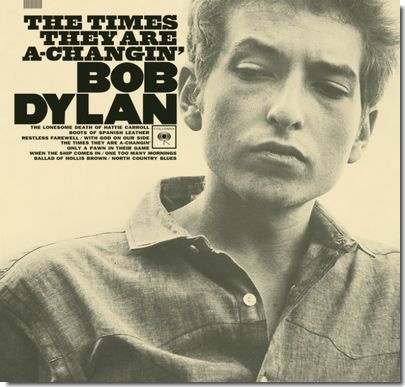
dissent. Those times, they are a-changin'.
Also see this related
post from 3/25/2005: Only A Pawn