Perhaps it was a link to a page that used to be on this website, or maybe you just tripped over a loose wire in the internets.


Bob Dylan’s Argument with a Leftist | The Cinch Review
In 1964, Bob Dylan released the album Another Side Of Bob Dylan. While he later complained that he didn’t pick the title—feeling that it was “overstating the obvious”(Biograph interview, 1985)—the album was a departure of sorts, with its unabashed emphasis on the exploration of the internal world, and its lack of obvious “protest” songs. (In … Continue reading “Bob Dylan’s Argument with a Leftist”
God on Our Side | The Cinch Review
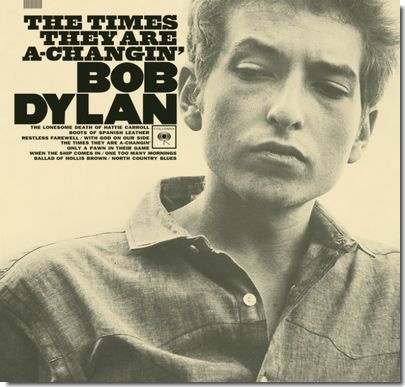
“With God on Our Side”, a song which Dylan wrote in 1963, is commonly referred to as one of Dylan’s great anti-war songs. I’d like to explore some of what my ears tell me is going on in this song, which I would certainly consider to be a very great song, though as to its … Continue reading “God on Our Side”

A Christmas Carol | The Cinch Review
Rock’n’roll writer Bill Flanagan interviewed Bob Dylan back in the 80’s, and remarked about the song “Sweetheart Like You,” that “anyone brought up with the Bible will hear that song one way, but the song will still work on a different level for someone else.” It’s a good observation and one that likely applies to … Continue reading “A Christmas Carol”
Chronicling Chronicles (reactions to Bob Dylan’s autobiography) | The Cinch Review
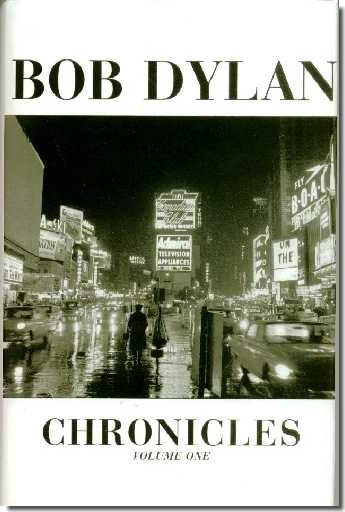
[Collected posts relating to Chronicles and the world’s response to it (in chronological order, first to last)] New Morning … 09/26/2004 CHRONICLES is excerpted in Newsweek. My own reaction to reading Bob’s narrative is just plain joy and amazement. It is absolutely direct. From the liner notes to the Jimmie Rodgers tribute album to the liner notes on World Gone Wrong, it had seemed that Dylan would always add the turns and twists of poetry to any kind of writing. But the writing here ... Continue reading "Chronicling Chronicles"

The Whole Wide World is Watching | The Cinch Review
With the re-release of 1985’s charity single “We Are The World,” along with the Live Aid DVD, now might be an appropriate occasion to re-examine some of Bob Dylan’s actions and remarks in connection with those things. Those too young to remember need to know that it all started with a famine in Ethiopia. Millions … Continue reading “The Whole Wide World is Watching”

Bob Dylan’s 1985 interview on the ABC TV show 20/20 | The Cinch Review
I believe the interviewer’s name is Bob Brown. I include the voice-over (v/o) statements of the show, in order to fairly provide the context of what was a highly edited segment on a magazine program, and also because assertions are sometimes made during the voice-overs that seem to refer to things that Dylan said during … Continue reading “Bob Dylan’s 1985 interview on the ABC TV show 20/20”

20/20 Hindsight (Outtakes from Bob Dylan’s 1985 Interview on ABC TV) | The Cinch Review
In 1985 Bob Dylan did an interview for ABC’s 20/20 TV show. He was interviewed by Bob Brown. The broadcast segment was less than 15 minutes, and only about half of that was actual interview footage. Now, on YouTube (uploaded by the generous Dylan collector “rankflv”) are the outtakes from that interview. I’d actually seen … Continue reading “20/20 Hindsight (Outtakes from Bob Dylan’s 1985 Interview on ABC TV)”
Bob Dylan Tells President Sarkozy What He Thinks of Globalism (from 2009 Rolling Stone Interview) | The Cinch Review
I think it’s actually too much to look at every interesting bit of Bob Dylan’s 2009 Rolling Stone interview all at once, so let’s do it piecemeal. One of the most amusing parts is what may go down in Dylan-lore (whatever that is) as “The Sarkozy Incident.” Bob Dylan was performing in Paris on April … Continue reading “Bob Dylan Tells President Sarkozy What He Thinks of Globalism (from 2009 Rolling Stone Interview)”

Not Enough Guns (1993 MTV interview with Bob Dylan and Carlos Santana) | The Cinch Review
Somehow I had not seen this, and thanks to Sue for e-mailing and apprising me of it. It’s an interview, which is on YouTube, with Carlos Santana and Bob Dylan from August 21st, 1993, in Memorial Stadium, Seattle — done for MTV, apparently. See below, and then below that are some remarks from Yours Truly … Continue reading “Not Enough Guns (1993 MTV interview with Bob Dylan and Carlos Santana)”

Who’s That Girl (from the Red River Shore)? | The Cinch Review
A few days ago I wrote a little about the newly released song “Red River Shore” from Bob Dylan’s Tell Tale Signs collection. Perhaps I was going a tad nuts implying that it might be the greatest thing Bob Dylan has ever done. After all, you could certainly argue that there’s nothing radical about the … Continue reading “Who’s That Girl (from the Red River Shore)?”

Look My Way an’ Pump Me a Few (Greil Marcus, Sean Wilentz and Christopher Ricks Talk Bob Dylan at Columbia University) | The Cinch Review
An Evening Of Talk On Bob Dylan; March 21st, 2005, Miller Theater (Columbia University, New York City), 8 pm. Not quite three angels, but three angles on Dylan were offered for the pleasure of the attending public the other night at Columbia University. The speakers were: Professor Christopher Ricks (esteemed poetry critic, writer of highly … Continue reading “Look My Way an’ Pump Me a Few (Greil Marcus, Sean Wilentz and Christopher Ricks Talk Bob Dylan at Columbia University)”
And below is some related material I wrote for other publications.
Originally written for The Weekly Standard (of blessed memory), and since published in the Washington Examiner:

What Dylan Is Not - Washington Examiner
A good deal of hoopla greeted the grizzled rock-musician Neil Young’s musical assault on George W. Bush earlier this year. His album Living With War included a hundred-voice choir singing a song entitled “Let’s Impeach the President.” For those survivors of anti-Vietnam war protests, and their younger would-be imitators, it was a moment for a sharp
Becoming Bob Dylan - Washington Examiner
[A review by me of the book "Like a Rolling Stone: Bob Dylan at the Crossroads," by Greil Marcus.]
Bob Dylan once referred to rock critics as “40-year-olds writing about records that are geared for people that are 10 years old.” He made that comment about 20 years ago, so now one must suppose that those same
Bob Dylan once referred to rock critics as “40-year-olds writing about records that are geared for people that are 10 years old.” He made that comment about 20 years ago, so now one must suppose that those same
In First Things:
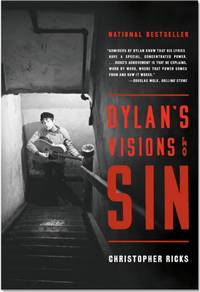
The Things That Remain - First Things
[A review by me of the book "Dylan’s Visions of Sin," by Christopher Ricks.]
In October 1985, Bob Dylan was interviewed on television, and among the questions posed was this: “There have been times when born-again Christianity, orthodox Judaism, both of those were important to you? Or is it a broader thing for you?”
In October 1985, Bob Dylan was interviewed on television, and among the questions posed was this: “There have been times when born-again Christianity, orthodox Judaism, both of those were important to you? Or is it a broader thing for you?”